Air Pollution and eye health: how air shapes how clearly we see life

May 26, 2026
Air pollution affects society every day and continues to jeopardise human health as a whole. The human eye, in particular, serves as a first line of defence against environmental pollutants, with only a thin layer of precorneal tear film separating it from any harmful external particles and chemicals. Repeated exposure to air pollution can cause inflammation and oxidative stress increasing the risk for long-term vision problems. From the constant discomfort of dry eyes to vision threatening diseases, the air we live in can completely shape our health and how we see our everyday life.
Dry Eye Syndrome
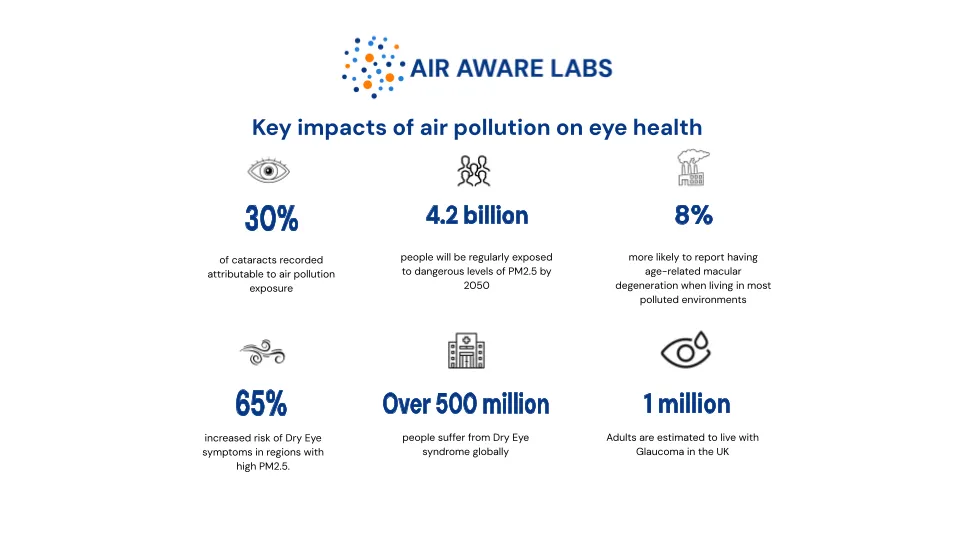
Dry Eye Syndrome occurs when the eyes cannot effectively produce enough tears and become deprived of moisture. Particulate matter and various gaseous pollutants can adhere to the tear film, increasing tear evaporation and causing significant inflammation on the ocular surface. Evidence suggests that over 500 million people suffer from Dry Eye Syndrome globally and those living in regions with high levels of particulate matter, particularly PM2.5, have a 65% increased risk of developing it. Consequently, Dry Eye Syndrome remains one of the most common long-term consequences of air pollution on eye health.
Age-related macular degeneration
Age-related macular degeneration is an eye disease that damages the central part of the retina, a light sensitive tissue at the back of the eye, leading to a progressive loss of clear, sharp vision. Long term exposure to toxic vehicle emissions and particulate matter can trigger neural damage by irritating the retina’s tissues and underlying blood vessels. Research shows that age-related macular degeneration is the leading cause of irreversible vision loss among adults.
Angel Closure & Glaucoma
Angel Closure is a condition where the iris, the coloured part of the eye, blocks eye drainage systems. Air pollution can trigger systemic inflammation and oxidative stress leading to swelling of the tissues inside the eye, blocking the drainage system, trapping fluid, and increasing pressure. When pressure spikes, it can damage the optic nerve, resulting in an eye disease known as Glaucoma. An estimated 1 million adults are living with Glaucoma in the UK, experiencing reduced depth perception and a loss of peripheral vision.
Cataracts
Cataracts are the clouding of eye lens that can cause muted vision or, in severe cases, blindness. Toxic chemicals and particulate matter in air pollution can lead to the degradation of the structural proteins in the eye's natural lens over time. Research suggests that 30% of cataracts recorded are attributable to air pollution exposure. Cataracts are more commonly linked with indoor air pollution from tobacco smoking, cooking, heating, and poor ventilation inside buildings.
What you can do
While air pollution cannot be completely avoided, there are things you can do to lessen the exposure and protect your eye health. Wearing sunglasses when pollution levels are high can help block out airborne pollutants and protect your eyes from irritation, while limiting time outside during peak traffic times can reduce your exposure with vehicle emissions.
Maintaining good indoor air quality is equally important. Using air purifiers, improving ventilation, reducing cigarette smoke, and limiting harsh cleaning chemicals and dust can help create a safer environment for the eyes.
AirTrack
As air pollution continues to pose an increasing threat to human health, it is essential to remain informed about air quality and the impacts it has. With AirTrack, users can see active insights on air quality and quickly monitor pollution levels specific to their location. Additionally, AirTrack also offers personalised recommendations to minimise exposure to harmful pollutants, inspiring users to prioritise and protect their health and well being.
Mia Simons overseen by Will Hicks
.svg)