Women and air pollution

December 15, 2025
In this article, we examine the ways in which air pollution affects women’s health, arguing that air pollution is not only an environmental issue, but also a critical gender and environmental justice concern that demands a targeted and inclusive policy response.
A leading but unequal health risk
Air pollution is a leading global health risk, yet its impacts are not experienced equally across all populations. Growing evidence suggests that women are more likely to face greater exposure to air pollution due to traditional gender roles, occupational patterns, and biological vulnerabilities. In many lower and middle income countries, women are often more exposed to household air pollution because of cooking and heating with polluting fuels. In urban areas, women are overrepresented in informal low-skill jobs with high pollution exposure and limited workplace protection.
Air pollution has been linked to many severe health risks for women, including increased risks of cardiovascular disease, respiratory illness, infertility, adverse pregnancy outcomes, and maternal complications. These harms are further intensified for women of colour, who are more likely to live and work in highly polluted environments, yet remain underrepresented in environmental policy discussions.
Exposure matters
A substantial body of research has established air pollution as a critical global health concern, yet only recently has attention shifted towards understanding how its impacts differ by gender. Women and children bear the greatest health burden from polluting fuels and technologies used for cooking and heating because they spend more time performing domestic labour. Exposure to smoke from wood or coal has been linked to respiratory disease, cardiovascular illness, and even premature death.
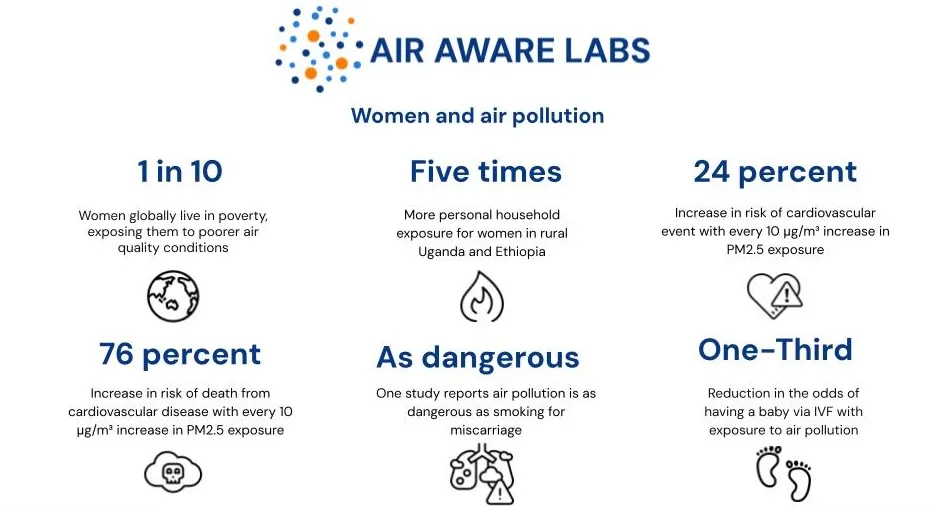
A study in rural Uganda and Ethiopia found a five-fold difference when comparing the personal household exposure of men versus women, largely driven by gendered divisions of labour. While household exposure is well documented, there is significantly less research on gendered exposure in the workplace, particularly in informal employment sectors.
Gender, work and occupational exposure
Women are disproportionately represented in informal and low-income employment, where exposure to air pollution is often unavoidable. Work such as street vending, market trading, and waste collection place these workers in proximity to pollution for long periods of time. Often they do not have access to protective equipment. Evidence from South Africa shows the health consequences of this exposure. A study of female street traders in KwaZulu-Natal found correlations between pollution exposure, infertility, and low birth weight infants. These findings highlight how economic necessity can force women into prolonged exposure with long-term reproductive consequences.
Health impacts on women
Research suggests that women may experience more severe health consequences related to air pollution than their male counterparts. This is due to a higher prevalence of asthma and chronic obstructive pulmonary disease, which reflect pollution-related damage.
A major study in the New England Journal looked at nearly 66,000 postmenopausal women and found that each 10 μg/m³ increase in fine particulate matter (PM2.5) exposure was associated with a 24% risk increase in cardiovascular events and a 76% increase risk of death from other cardiovascular diseases. Evidence also suggests that diesel exhaust causes changes in blood components related to inflammation and heart disease, with far stronger effects observed in women. These findings suggest that both exposure and biological sensitivity contribute to gendered health outcomes.
Reproductive and maternal health
Air pollution poses significant risks to reproductive and maternal health. Air pollution exposure has been linked to infertility, miscarriage, stillbirth, and postpartum depression. Among individuals undergoing IVF treatment, it can decrease the odds of having a baby by over one third.
A comprehensive review in The Lancet identifies air pollution as a key risk factor for miscarriage, alongside smoking and other occupational hazards. One study found that air pollution was as dangerous as smoking for miscarriage. These outcomes have lasting consequences for women’s physical, psychological, and economic wellbeing.
Environmental justice and women of colour
Women of colour are disproportionately exposed to high levels of air pollution due to structural inequalities in housing, employment, and urban planning. The “Black Child Clean Air” initiative highlights the connection between toxic air exposure, cardiovascular disease, and maternal mortality among Black women, who are often excluded from environmental policy discussions. A lack of awareness and representation further exacerbates these disparities, reinforcing the need to incorporate racial and gender equity into air quality policy.
At Air Aware Labs
At Air Aware Labs, we believe that everyone deserves access to clean air. It is important to recognise that women face greater exposure through household responsibilities and occupational roles, alongside biological vulnerability. Organisations such as the Climate & Clean Air Coalition aim to provide a framework for future environmental policy decision-making. Awareness of these issues is growing, with people in our network, such as Claudia Castro Faccetti, helping contribute to the conversation and educate others.
Defining air pollution as a gender and environmental justice issue is essential for developing effective and equitable policy responses.
Caroline Graybill overseen by Louise Thomas
.svg)