AirTrack new pollen feature

May 6, 2026
.png)
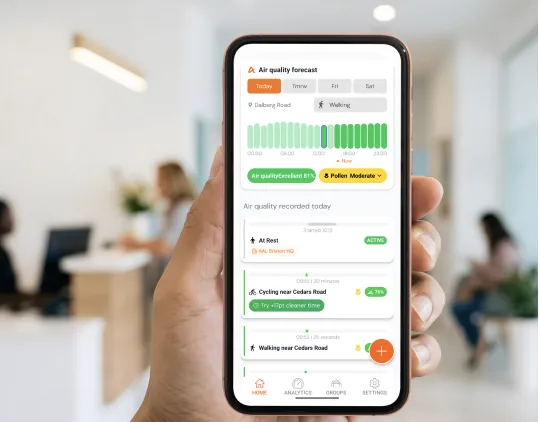
Pollen tracking is now live on AirTrack! But the bigger issue is: why does it matter?
400 million people worldwide live with hay fever. That's 10-30% of all adults globally, around 1 in 4 people across Europe, and over 16 million in the UK alone. And every year, the season starts earlier and lasts longer - climate change is already the dominant driver of longer pollen seasons, with seasons starting up to 20 days earlier than in the 1990s.
It’s not just about how much pollen is in the air, it’s about what else is in the air with it. Pollen and air pollution don't just coexist, they interact. And the combination is significantly more damaging than either alone.
Here's the science
→ Particulate matter (PM2.5) amplifies the allergic response to pollen - on high PM2.5 days, pollen triggers significantly more allergic reactions than on cleaner days.
→ Pollution fragments pollen into smaller particles that penetrate deeper into the lungs — reaching parts of the respiratory system larger grains typically can't.
→ Nitrogen dioxide (NO₂) and ozone worsen airway inflammation and impair your airways' natural ability to clear allergens, extending symptoms well beyond high pollen days.
A 2023 University of Manchester study found that urban dwellers reported worse hay fever symptoms than people in rural areas - even when rural pollen counts were higher. Runny nose, sore eyes, and wheezy breathing were roughly twice as severe in urban areas than rural ones. It's not just what's in the air. It's what's in the air with it.
And air pollution causes nearly 8 million deaths each year - the second leading cause of ill health worldwide, driving respiratory, cardiovascular, and cognitive impairments, both short and long term. Most people have no idea what they're breathing on any given day.
Cities are starting to act
Japan has committed to reducing cedar forests by 20% within a decade, with a goal of halving pollen levels within 30 years. Islamabad is removing 80,000–100,000 paper mulberry trees and replacing them with native, low-allergen species. These are meaningful steps — but they will take decades.
You don't have decades to wait for relief. That's why we built pollen tracking into AirTrack.
AirTrack and pollen
AirTrack already monitors outdoor and indoor air quality and helps over 4,000 users across 90 countries navigate cleaner air routes, avoid pollution hotspots, and make smarter decisions about when and where they go. Now, with pollen tracking added, you get a complete picture of what you're exposed to throughout your entire day.
Real-time pollen and air quality data. Personal exposure hotspot maps. Cleaner route suggestions. AirCoach street-by-street guidance. 4-day forecasts. All in one place.
Because knowing what's in the air isn't a nice-to-have. For hundreds of millions of people, it's a health decision they're making every single day, whether they realise it or not.
Download AirTrack. Know your Air.
.svg)