Pre-print of first scientific article

December 31, 2025
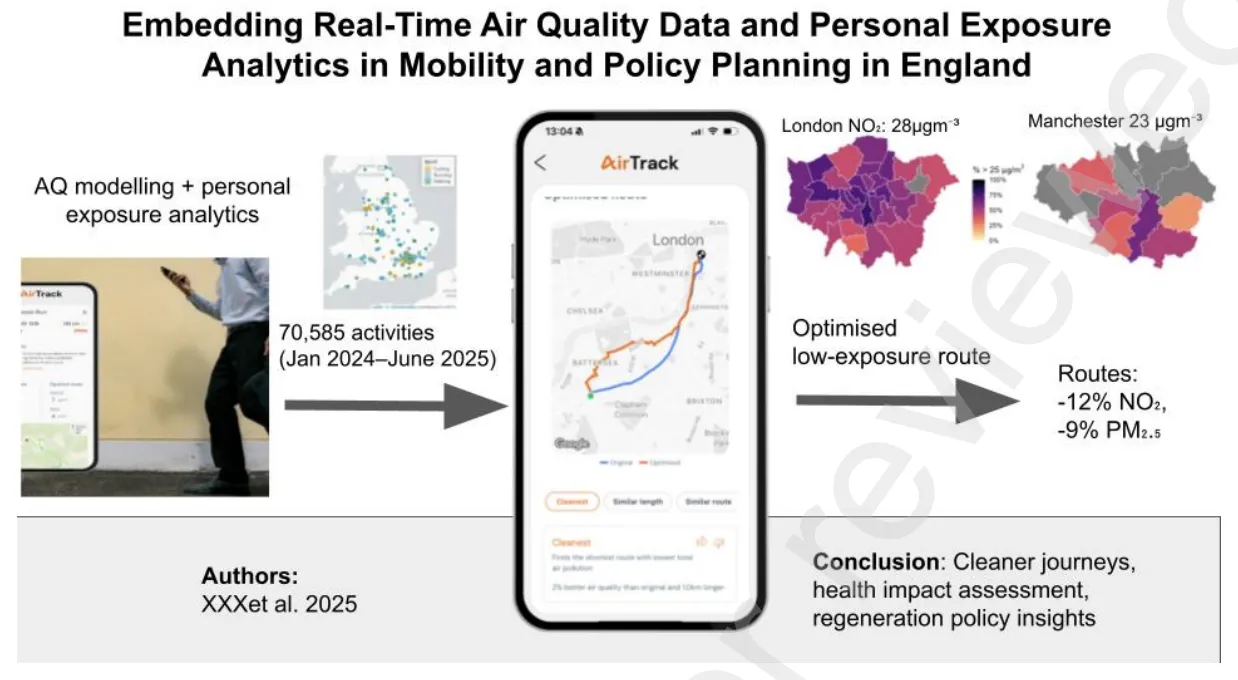
SSRN published our new pre-print article (currently under review in the Cities journal) which explores how air quality evidence can evolve within transport and urban planning decision making.
While statutory air quality assessments remain essential, our paper shows that relying on predicted changes in annual average concentrations can overlook the route-level and time-specific exposures people experience in practice. By complementing existing assessments with route-level exposure analytics (as well as providing residents with tools such as AirTrack to reduce exposure), planning workflows can better evaluate schemes based on realised health outcomes, not just infrastructure delivered.
We also present a case study in Brent (Harlesden) demonstrating how active travel routes can be designed to minimise air pollution exposure.
As we continue to personalise air quality data, our approach supports more equitable, targeted interventions by identifying when and where exposure burdens are highest within cities. In doing so, it helps shift air quality from a purely retrospective compliance requirement towards a more proactive, health-centred decision-support tool for planners and policymakers alike.
Read the full pre-print article.
.svg)