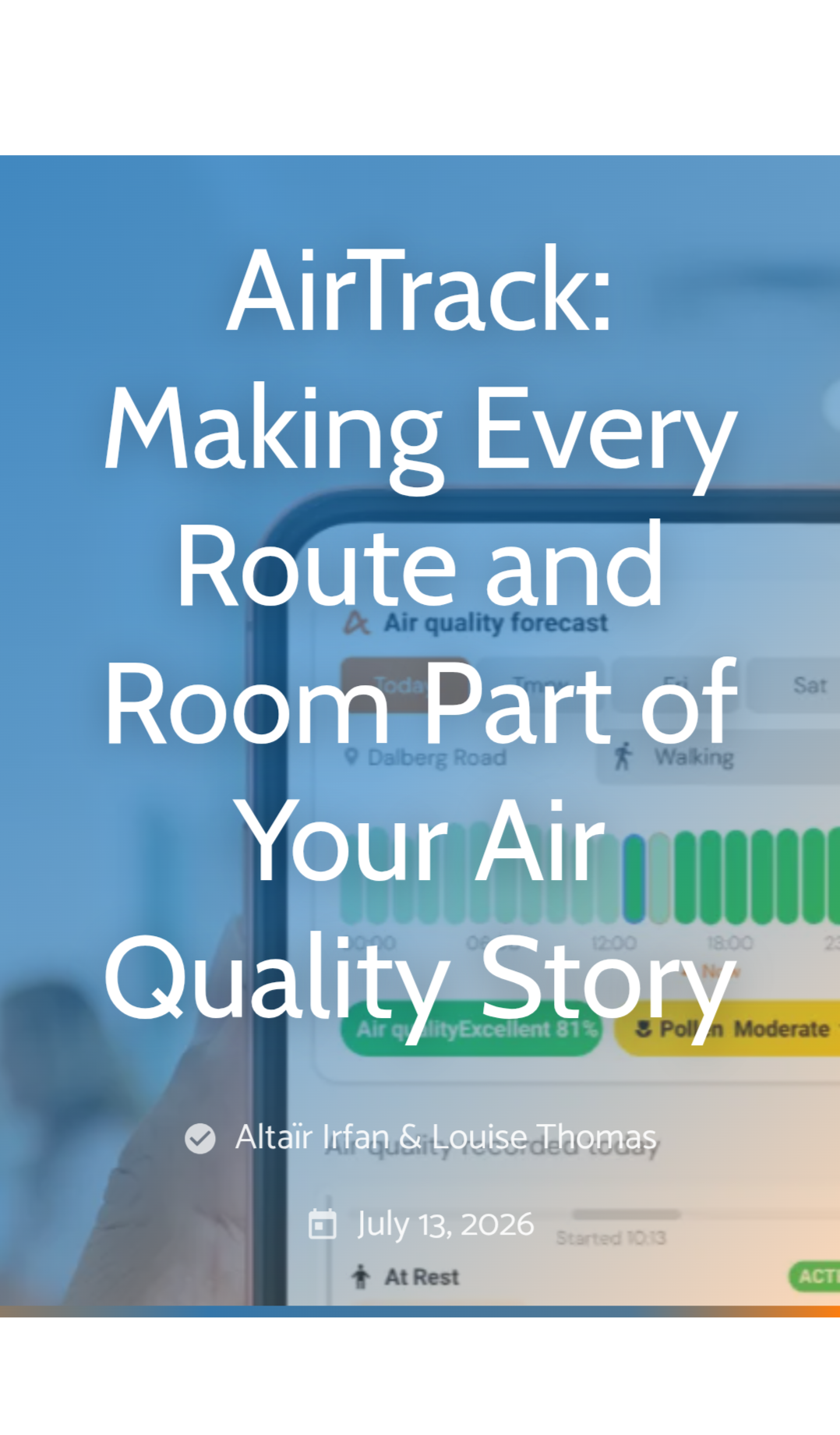
AirTrack Scoring Overview

March 28, 2026
What AirTrack does
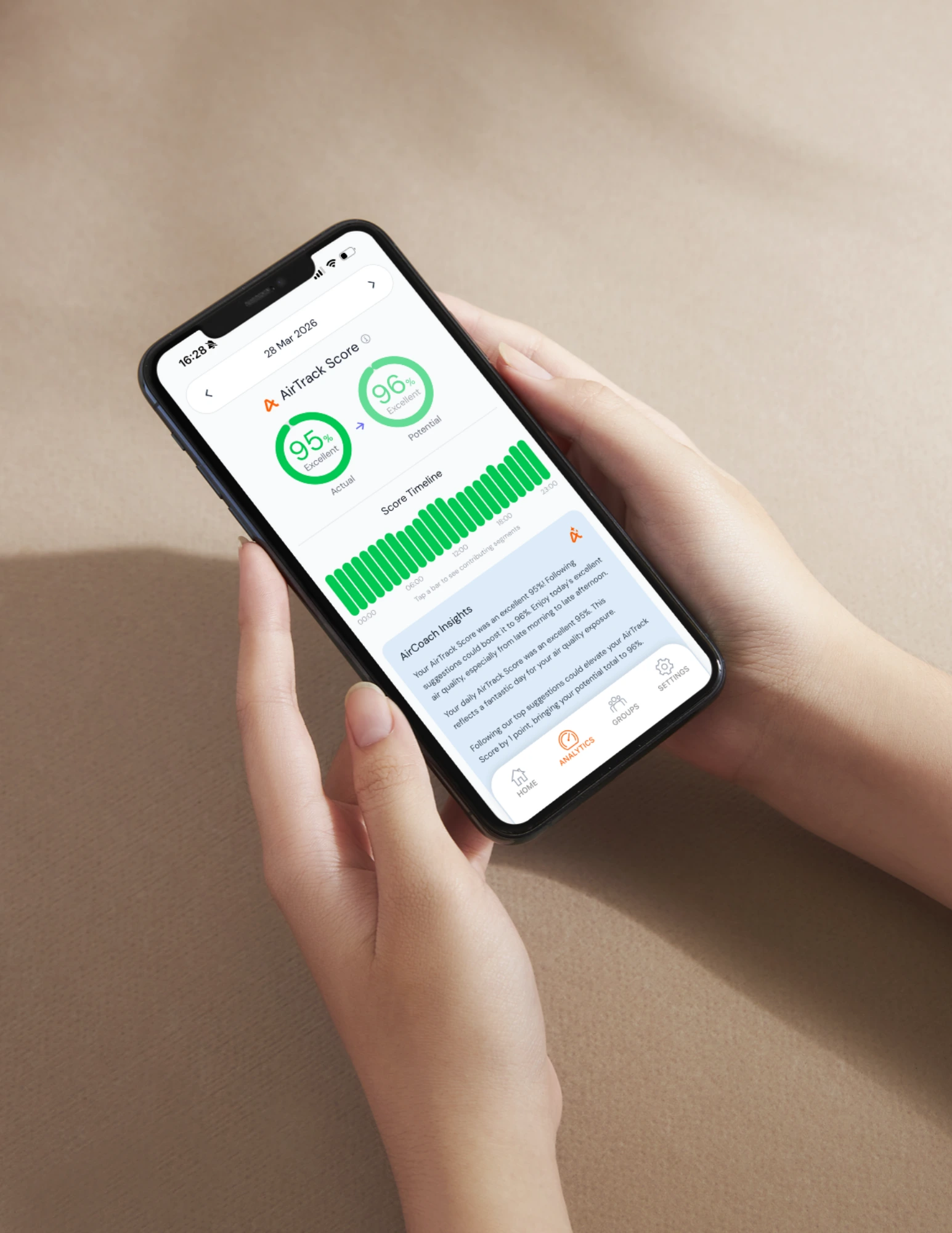
AirTrack gives you a simple score that reflects the air you breathe across your day, not just the pollution level at one point on a map.
It looks at three things:
- the outdoor air around you
- how you travel
- what happens indoors
Outdoor air
For outdoor air, AirTrack uses live air quality information incorporating Google data, as well as local reference monitors and sensor networks, satellite data, maps, weather, and traffic.
This gives the background pollution levels where you are.
Travel and transport
AirTrack adjusts your exposure depending on how you travel. For example:
- walking, cycling, driving, and public transport all differ
- air inside a vehicle can differ from outside, and depend on if windows are open or shut, and if air con is on vs recycling
- busy roads tend to have higher pollution
- being more active (e.g. cycling or running) means you breathe more air, increasing exposure
Indoor air
AirTrack also considers indoor air.
Indoor air can change because of things like:
- cooking
- cleaning
- smoking
- wood burning
- ventilation and window use
Why this matters
AirTrack is designed to help people understand the air they actually breathe, not just the air shown by a city wide average. That makes it more useful for:
- daily decisions
- route choice
- understanding exposure patterns
- comparing places, journeys, and habits over time
How the AirTrack score works
AirTrack combines air quality, route information, and indoor context into a score that changes as your exposure changes. That means:
- spending longer in polluted air → your score goes down
- spending time in cleaner air → your score goes up
- Choosing low pollution routes and times → your score goes up
The score reflects not just how polluted the air is, but also how long you’re exposed and how active you are. Two people in the same place can experience very different exposure depending on their activity and time spent there.
Your score reflects the route and choices you actually made. Because air pollution varies across streets, times, and environments, there are usually cleaner options available, meaning you can improve your score even in more polluted cities.
Small changes (like choosing a different route or time) can significantly reduce your exposure and improve your score.
The score is calculated continuously over time and combined into a total for your activity or day.
What the score is not
AirTrack provides an estimate based on the best available data, not a direct measurement of every breath. It may not capture very short spikes from brief, sporadic sources.
In one line
AirTrack turns air quality and exposure context into a simple score that helps people understand where they breathe cleaner air and where they are more exposed.
.svg)