Meeting on AirTrack in Africa

May 8, 2026

The meeting involved speakers from UrbanBetter, Afya Lafia, Clean Air Africa, Airqo and International Student Environmental Coalition.
Background
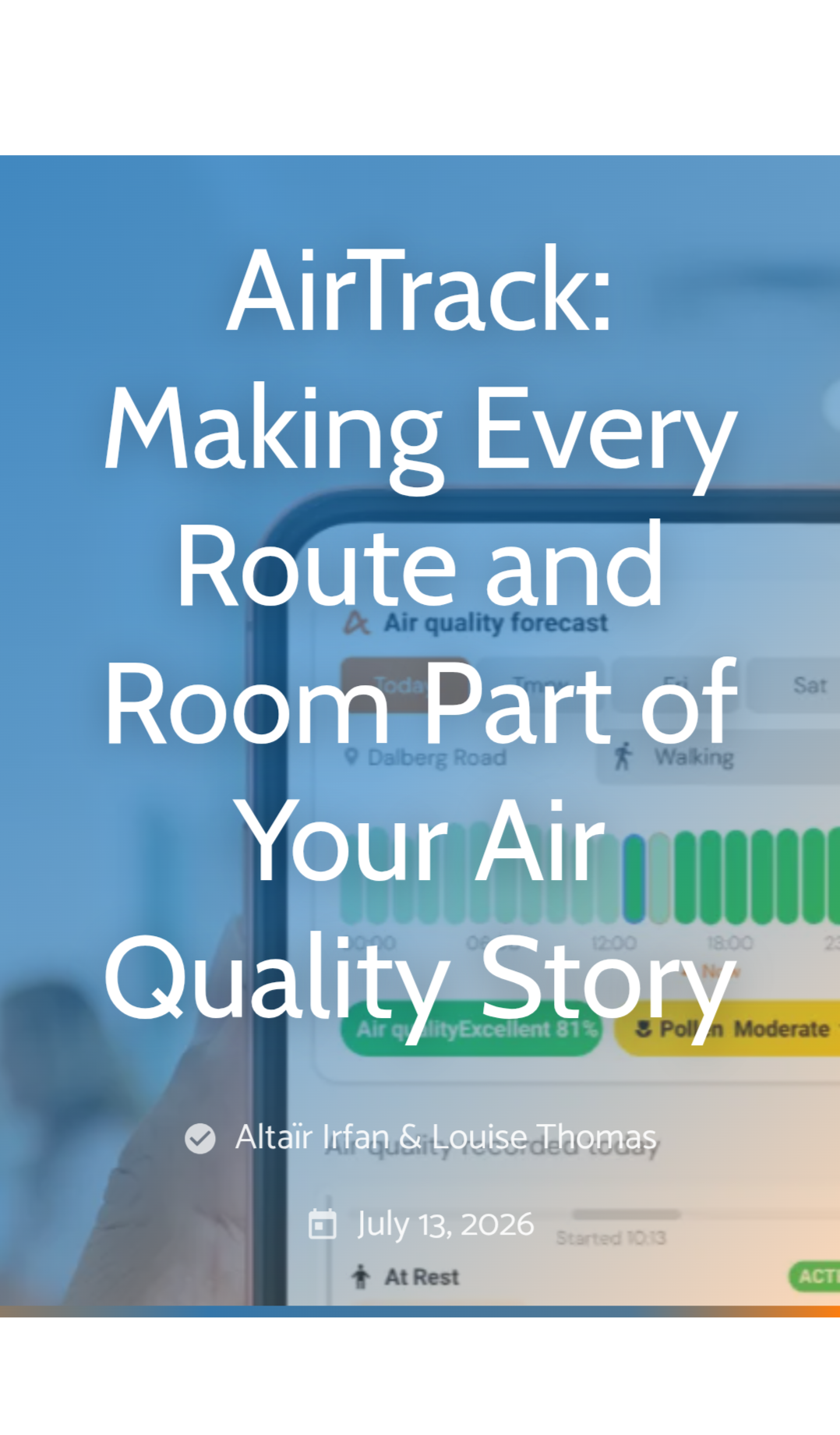
Air Aware Labs launched AirTrack v2 in April 2026, offering personalised air pollution exposure tracking and health insights. The launch received significant interest and coverage in Africa, but app performance is currently limited across much of Africa because of gaps in available air quality data. The meeting explored how Air Aware Labs could work with regional experts to improve coverage, data access, and impact.
Key themes
1. Air quality data availability is highly uneven across Africa
Participants repeatedly highlighted that air quality monitoring across Africa remains fragmented, sparse, and inconsistent. Some countries and cities are making strong progress, while others have little or no reliable monitoring infrastructure. Across the continent, several participants stressed that many countries still lack basic monitoring capacity, while others have isolated projects that stop once research funding ends.
2. Fragmentation and silos are major barriers
A consistent concern was that data is often held in silos by academic institutions, NGOs, local projects, governments, or individual sensor owners. This makes it difficult to create a reliable, continent-wide picture.
Fragmentation exists not only between organisations, but also across:
- Sensor types and data quality standards
- Cities, counties, and countries
- Academic, government, and community-led initiatives
- Sectors responsible for pollution, such as transport, waste, industry, and cooking
Participants suggested that solving the data problem is not just about deploying more monitors. It also requires coordination, governance, interoperability, and shared platforms.
3. Data quality, governance, and sovereignty matter
Several contributors emphasised that improving data availability must go hand in hand with improving data quality and trust. Low-cost sensors are valuable but need calibration, validation, and clear quality-control processes.
There were also concerns about data sovereignty and governance. Open data was broadly supported, but participants noted that African institutions and communities need to have agency over how their data is collected, shared, interpreted, and used.
4. Turning data into action is the central challenge
Participants repeatedly returned to the question of how monitoring data can lead to practical change. Data alone is not enough.
Important use cases included:
- Raising public awareness
- Supporting health messaging, especially around respiratory disease
- Influencing city planning and transport policy
- Targeting interventions in high-exposure communities
- Supporting schools still using biomass or other polluting fuels
- Helping journalists and community groups communicate local exposure risks
- Community and youth-led approaches
- Building evidence for sustained policy and funding action
There was strong interest in translating technical data into accessible messages for communities, policymakers, and non-specialists.
6. Aggregation platforms could help, but coverage remains limited
Platforms such as Google, OpenAQ and Airqo were discussed.
7. Funding will be essential
The group discussed the need for funding to expand monitoring, improve infrastructure, integrate data, and make tools like AirTrack useful across the continent.
It was noted that air quality may be most fundable when framed through co-benefits, such as health, climate, urban planning, children’s wellbeing, transport, and resilience, rather than as a standalone technical issue.
.svg)