What's changed for athletics events and what you need to know if you're organising one

July 21, 2026
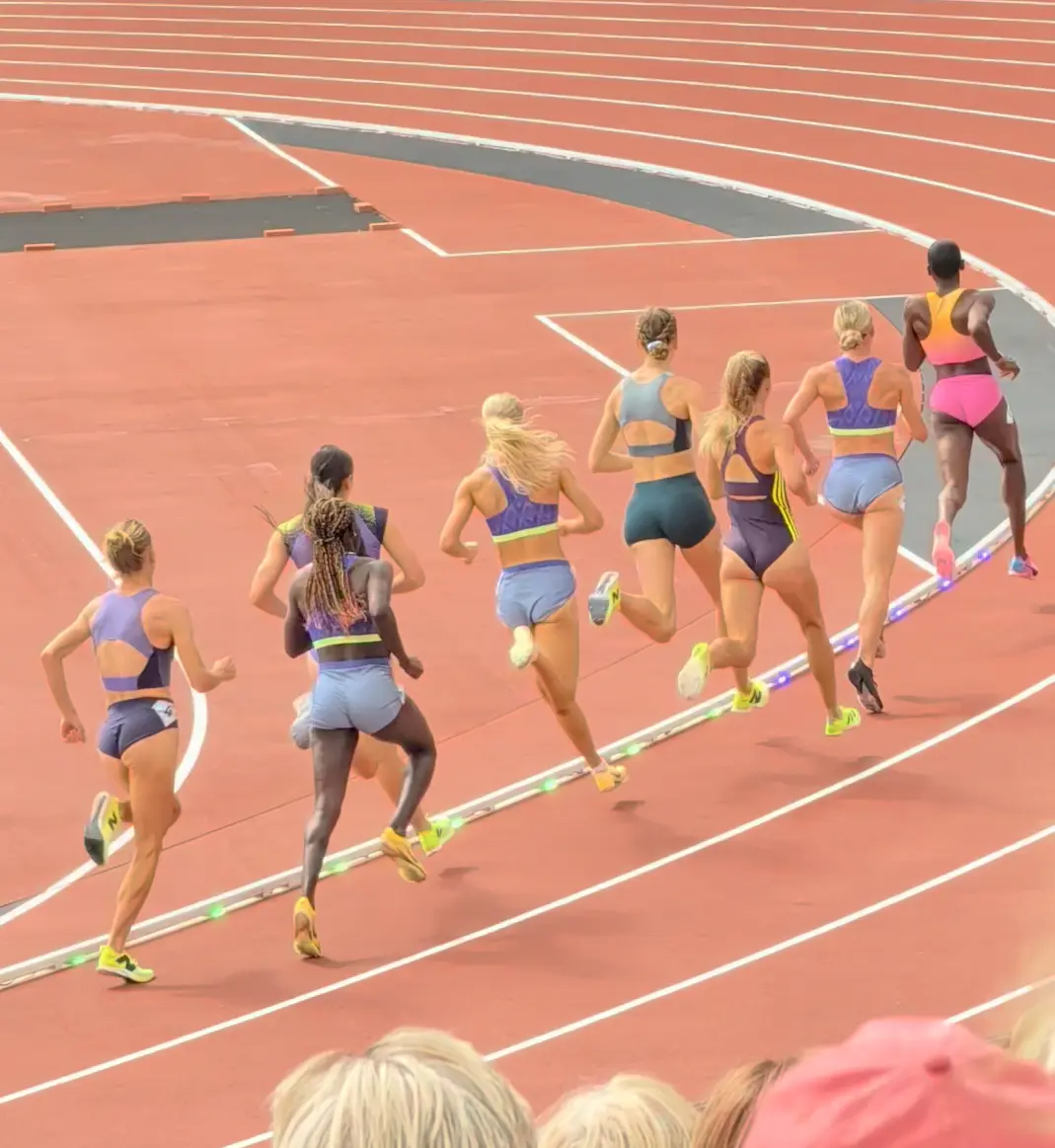
There's good reason for that: athletes take in up to 20 times more air than someone at rest during intense exercise, and research keeps linking pollution to slower marathon times, reduced lung function, and even performance dips in fast-moving team sports. Here's what's changed, and what it means if you're organising an event.
What's changed
World Athletics scores events on sustainability through the Athletics for a Better World (ABW) Standard, introduced in 2024 after a two-year pilot. It covers six pillars — diversity and wellbeing, leadership in sustainability, sustainable production and consumption, climate change and carbon, local environment and air quality, and global equality and events are rated Bronze, Silver, Gold or Platinum.
Until now, taking part was voluntary. From 2026, that changes: ABW compliance becomes part of the contract for World Athletics Series host cities, with minimum thresholds built into hosting agreements. World Athletics' own 2026 strategy review puts air pollution alongside extreme heat, severe weather and event logistics as one of the four issues it's watching most closely through 2050.
The numbers show how quickly this is scaling:
- 2024: 104 events reported under the Standard; 13 were certified (2 Platinum, 2 Gold, 4 Silver, 5 Bronze).
- 2025: 121 events reported, and certifications more than doubled to 27 (3 Platinum, 5 Gold, 10 Silver, 9 Bronze).
- Air quality specifically: 40 of 102 reporting events included it in the Standard's first full review, a bit behind the other pillars, but a fair starting point given how new this kind of reporting still is.
World Athletics expects 500+ events to eventually report under the Standard, so this affects a lot of organisers, not just the biggest championships.
What you need to know if you're organising an event
Good examples are still rare. Even really thorough sustainability reports, strong on carbon, waste, diversity, community, often don't say much about air quality yet, including the MW Berlin Marathon's detailed 2024 report. That's not really about any one event, it's more that this part of the Standard is new, and there isn't much to work from yet.
One early example is the Running for Clean Air Warsaw 2024 report, put together by World Athletics' Health & Science team using a Kunak sensor placed in a Warsaw park for five months ahead of the Warsaw Marathon. It's worth knowing about, but it reflects a fixed-sensor deployment, a different, more infrastructure-heavy approach to the one we use.
Our London Marathon work is the gold standard. It's a straightforward offering that covers both reporting and race day:
- An ABW-ready air quality report modelled and evidence-backed, mapped straight to ABW's requirements, without months of physical sensor deployment.
- Live air quality data on big screens and mobile real-time conditions for athletes, coaches and fans, as we delivered at the London Diamond League.
- Route planning for spectators so people can choose cleaner ways to and from your venue.
Momentum is building. World Athletics is scaling its Running for Clean Air programme, now in phase two with Kunak, Arup and UrbanBetter for the World Indoor Championships, a sign this is moving from one-off pilot to standard practice.
There's a practical way in. You don't need a five-month sensor deployment to put together a solid submission. We've spent time getting to know this space, how the ABW scoring works, what examples exist, where organisers tend to get stuck and built a template air quality report for the London Marathon, based on the Warsaw report and the Ribalta methodology, adapted to work with modelled data alongside fixed sensors. It includes:
- A simple comparison of modelled versus sensor-based monitoring, so you can weigh up what fits your event and budget
- A model validation section, showing the evidence behind the numbers
- Pre-event traffic scenario modelling, so you can estimate the air quality benefit of road closures before race day, not just measure it after
- An evidence checklist that maps each section straight back to what ABW actually asks for
Get in touch
We're already working on air quality with two of the biggest names in the sport: the London Marathon and the London Diamond League. We know first-hand what organisers are up against, from ABW reporting to what fans and athletes actually want to see on the day.
Get in touch to find out what a template air quality report could look like for your event: hello@airawarelabs.com
.svg)